Slick with Untruth

Facebook, some contend is an affront to our intelligence. But what happens when the collective intelligence of Facebook isn't much to speak of in the first place? I stumbled upon this Facebook group: “30 days without Shapes: so that rainforests can last the future” started by Ms. Amy Smith. It claimed:

You probably don’t know this but Arnotts have snuck palm oil into their shapes and have called it vegetable oil. Palm oil is a major cause of deforestation at the moment which is threatening the existance of countless species. I’m hoping if enough people join in we can change what a company puts into their products one product at a time. So please don’t buy or eat shapes for a month and tell everyone you know… because nothing tastes so good that it is worth distroying a whole eco-system for. And remember it worked for Cadbury chocloate and kitkat.


(All typographical errors have been left intact.) Being a journalist I expected proof to be shown that any of these contentions had even a modicum of truth to them. So, I began to investigate.

I probed the main thrust of the claim: that Arnotts have “snuck” palm oil into their products. So I called Arnotts, Choice Magazine, The Borneo Orangutan Survival (Australia) Group and the Rainforest Information Center (Palm Oil Action Group) to find out. Arnotts, Choice and The Palm Oil Action Group all responded to my queries.

The short answer?: No, they weren't.

Arnott's supplied me with a fact sheet that informed me that the company is making efforts to ensure their palm oil is being sourced sustainably. They work with its palm oil supplier, Cargill who is an active member of the Roundtable on Sustainable Palm Oil. Arnotts will have switched to sustainable palm oil completely by 2015 (Prior to August 2010, it was not) and will have decreased their total palm oil usage by 25%, switching to alternative products. Arnotts also say they use 0.05% of all palm oil produced globally, annually. So where was the deception if this was freely available information?

Choice Magazine has not investigated such a claim which lead me to believe that Ms. Smith had not done her homework, at the very least. On Saturday, I got a call from the very chatty and knowledgeable Charlotte "Charlie" Richardson, coordinator of the Palm Oil Action Group.

Arnotts have admitted to using palm oil in their foods yet do not label it as such explicitly, rather as "vegetable oil." So were they lying? No - there is no reason why they "they shouldn’t list palm oil" apart from internally driven policy. So we should be upset at Cargill? Wrong again: They have switched to 60% certified sustainable crops and that "more was to follow." Ms. Richardson says there’s “room to improve” but it was "not realistic to call for a total moratorium."

Surprisingly, when I pressed Ms. Richardson if people should stop eating Shapes to punish Arnott's for their past sins, she replied:


"I don’t think they should be punished for anything; they should be rewarded for heading in the right direction."

So apart from the economic devastation it would cause to over two million people over Asia, Latin America and Africa if palm oil production was suddenly halted, Arnott's, providing it was sourcing its palm oil unsustainably and contributing to environmental damage was only a very very minor player in the overall scheme of things. Even so, the boycott is redundant; they already have achieved what they campaigned for a month before they started.

So was Ms. Smith committing a crime of omission or passion? Either way, she has mislead over 13,000 people (at the time of writing) and libeled Arnotts Biscuits as taking part in something they are in no way involved with in the process.

In sum, the raison d'etre of her group is based on a lie.

I implore Ms. Smith to dismantle her group, apologize to all of those she has lied to and retract her call for a boycott of Arnott's Shapes biscuits. For all the potential damage she has already caused, it's the least she can do.

UPDATE: Amy Smith has updated the event to reflect the new facts that I and others have presented. She now intends to raise awareness of the unsustainable palm oil industry.

A Holey Meditation

"If some one can prove me wrong and show me my mistake in either thought or action, I shall gladly change. I seek the truth, which never harmed anyone: the harm is to persist in one's self-deception or ignorance."


-- Marcus Aurelius, Meditations (Book 6.21)

I had a thought that came to me in a dream the other day that concerned the perception of others and how one lives a life. Imagine you put everything you did in life - work, friends, family, hobbies, etc. etc. into a space 100m by 50m square and erected a 10" fence around it. In the middle of that fence is a hole, approximately 1 or 2cm in diameter. About 90% of the people who meet you will see your life through that restricted peephole, the information they glean from it effects their feelings and judgment toward you; the measure of your character according to them is essentially only a very rough and incomplete estimation.

So if what they see is incomplete, how can one take umbrage to their opinions of you? They do not speak of you personally since they only take in less than 1% of who you are, all of which is tainted by their biases and preconceptions - the clothes you wear, the music you listen to. We may all have shared experiences but they are all unique to us and us alone. So how can we possibly take the infantile ad hominem attacks personally when they cannot describe us all? Our names are convenient identifiers but they can easily be changed. As social animals we rely on others to explore our own humanity - compassion, friendship, anger and love. Some of us strive for truth - insofar that we do not falsify intentionally - but we must also remember that there are only degrees of certainty; probabilities and details we inevitably leave out. We have the capacity to reason with logic and the scientific method and properly explore the world around us and constantly ask questions.
 
That said, we must also be cognizant of our limitations - our weaknesses, our faults and our shortcomings - as they also make us who we are. Human.

This is not a sign

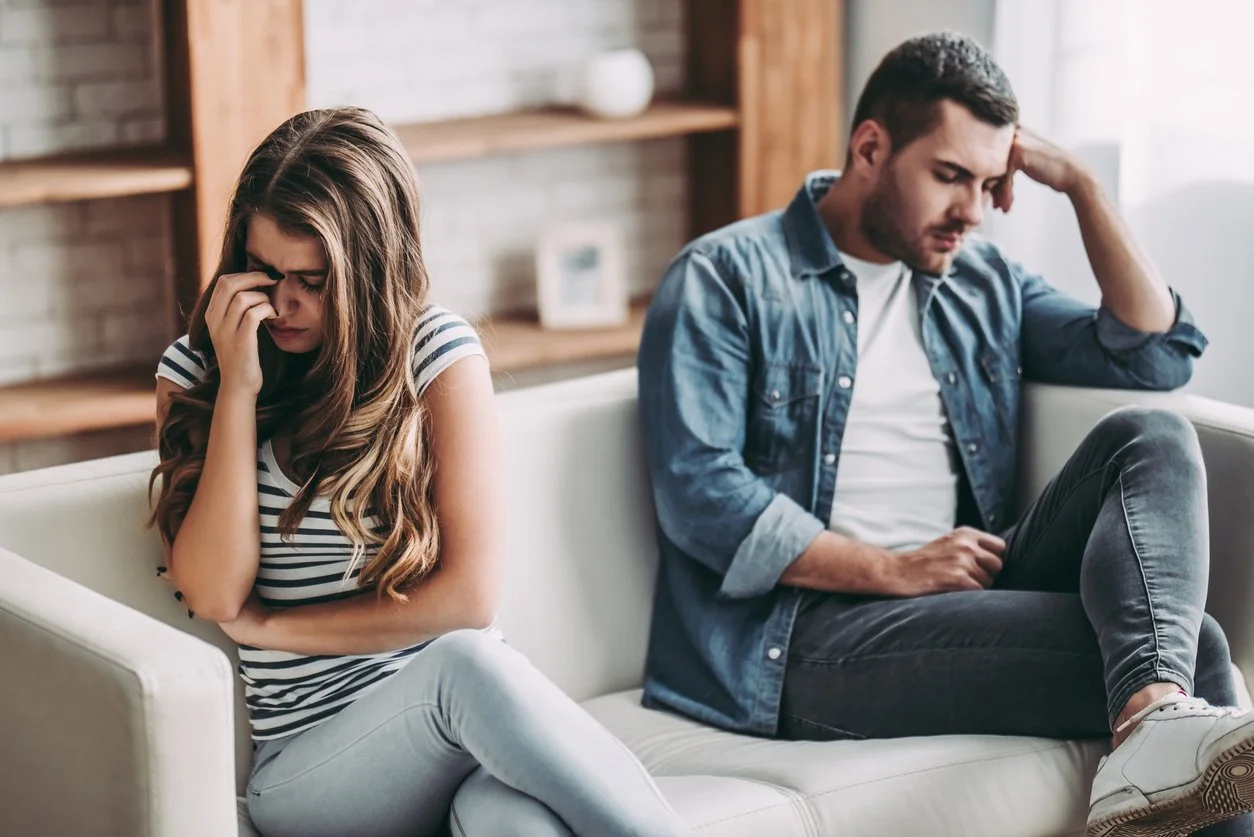
Talking to my broskie Mari today, we had a (very hearty) chuckle at one of our (former) twitter followers' predicaments following a "breakup" of her "boyfriend" who just so happened to live on the other side of the world. Communicating exclusively over the internet, it was revealed that this "boyfriend" neglected to give his e-paramour his phone number. He promptly deleted her from Twitter, Facebook, Skype and stopped responding to her emails.

You read correctly, sports fans. He didn't even give her his phone number.

I have been in a similar situation before but I was given her phone number, the phone numbers of her friends, pictures of them, letters and almost everything barring a physical presence. So why do people blatantly see warning signs when they arise and blithely decide to ignore them? Is it because they aren't told a warning sign is one when they see it? Do they need to be told in order for them to act upon it in the "correct" way?

Although seemingly unrelated, I had some free time today (on account of having no job - hopefully I'll inadvertently hack twitter somehow and gain some attention for myself) and read more of my perpetually renewed copy of Postman and Weingartner's Teaching as a Subversive Activity. There contained was an example of a class of students being forced to sit an exam again after several students were caught cheating, stealing the exam ahead of its sitting. Students' opinions ranged - it was unfair for make all to resit it due to the actions of a few; that it would give them an advantage over others; that sitting it again would impair their chances of passing since they forgot what they studied after the sitting anyway. The content of the test was irrelevant; it was only important the students passed.

Students in the modern era have been asking teachers "will this be on the test?" I always thought it curious and harmful during my high school years, considering I almost always read outside of the curriculum, especially for the humanities. I was ridiculed by others for doing so. It was, in the context of my "education", a complete waste of time which could be better spent "studying" for assessments.

So what did we all learn at high school? I loathe to think it was only information that required to be regurgitated at the right time in the right context. But the more I do remember about those days, the more my suspicions are confirmed. Since "being taught" is a top-down process, we are coerced into "learning" what teachers provide for us. If we didn't, a horrible consequence would befall us (such as ending up cutting onions in a potato factory, as my father would enjoy saying to frighten me.)

If they tell us a warning sign looks like A on a certain exam, then it cannot look like B. It is either A or not A. The Aristotelian law of non-contradiction holds fast in the classroom (in addition to the law of the excluded middle and the is of identity.) But as adherents of GS or other multi-valued empirical systems can attest to, it's far more ambiguous than that.

Affairs of the heart seldom are guided by the head. If the head is empty, then even more so. A warning sign usually doesn't say "Warning" on it. If our schools insist they do, then our schools are derelict in their mission to pass our knowledge on to the next generation so they may expand upon it.